All Saints of Russia

Second Sunday After Pentecost: All Saints of Russia (28 May / 10 June)

all saints of Russia

All Saints of Russia

Tropar of All Saints of Russia, Tone 8:  As a beautiful fruit of the sowing of Thy salvation, / the land of Russia doth offer to Thee, O Lord, all the Saints that have shone in her. / By their prayers keep the Church and the world in profound peace, // through the Theotokos, O Most-merciful One.
Kondak of All Saints of Russia Tone 3: Today the choir of the saints who pleased God in the land of Russia / doth stand before us in Church and invisibly doth pray for us to God. / With them the angels glorify Him, / and all the saints of the Church of Christ keep festival with them; // and they all pray together for us to the Eternal God. 

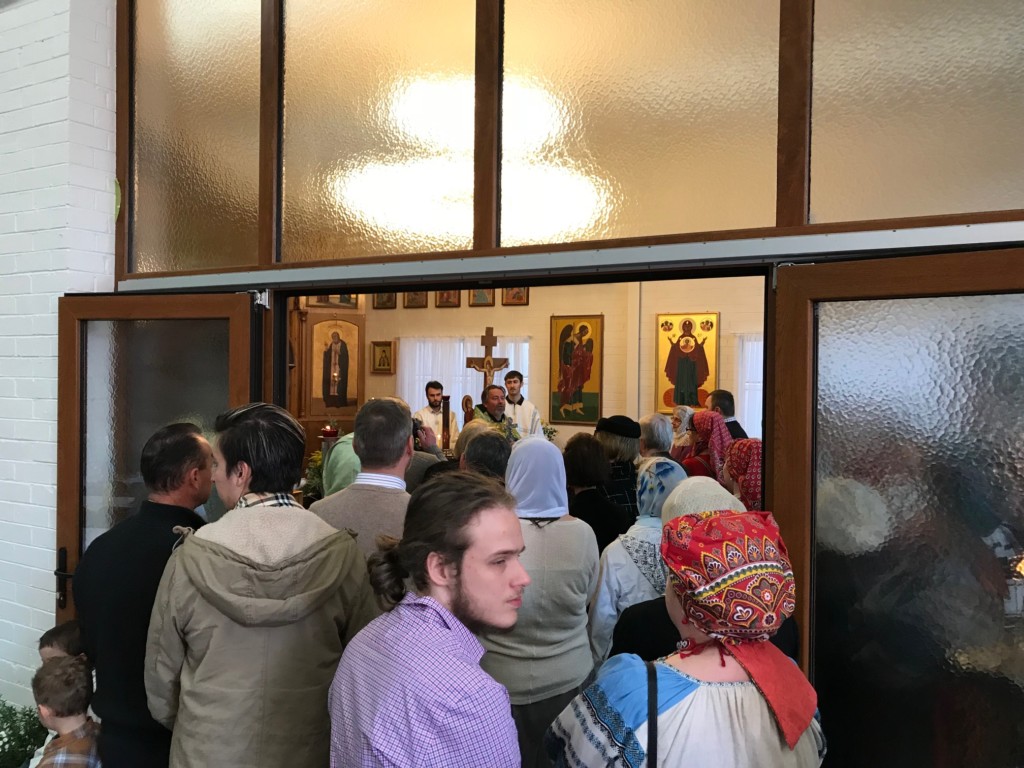
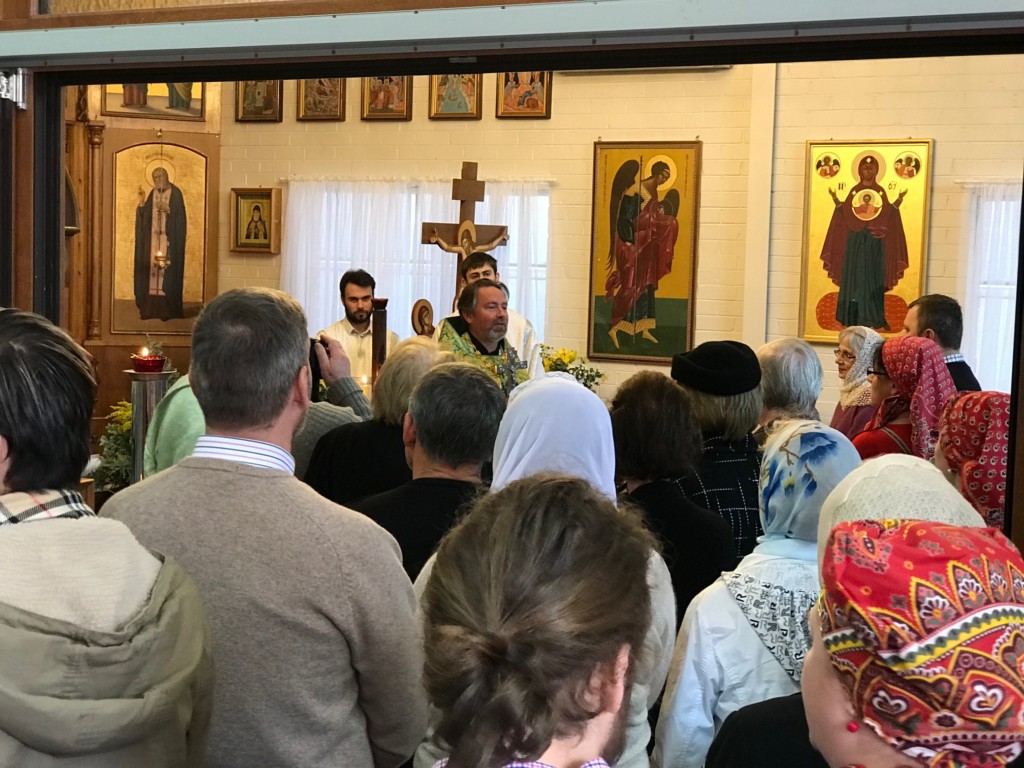
Last Sunday, the first Sunday after Pentecost, we celebrated the Feast of All Saints. We asked the question, “What makes a person a saint?” We talked about how saints are consecrated, set apart for the service of God, and no longer focused on worldly purposes. We looked at the icons, and the saints we see there, in our family picture album, and our church “hall of fame.” The conclusion was that they yielded themselves to the Holy Spirit, and so were set apart, consecrated to God – and that each one of us has received the same Holy Spirit, and that we are meant to be temples of the Holy Spirit, to minister to the needs of others and to proclaim the good news of our deliverance from death by our Lord Jesus Christ. We are all saints; and we are all meant to be “Saints,” in the way that we talk about those whom we remember, who we venerate through their icon.


Today we celebrate the Feast of all the saints whose light has shined upon us from the land of Russia, from the time of the baptism of Russia in the year of our Lord 988 through trials and invasions and wars, to those who are among the new martyrs and confessors, some of whom suffered and died during our own lifetimes. It took almost a thousand years for the good news to reach Kievan Rus’; it took another 800 years to make the journey from there across the steppes and the taiga to the western shore of the Pacific Ocean, and then, from the port city of Saints Peter and Paul, to come to Alaska, and down the west coast of the North American continent, in the year 1794. The faith was carried across the Russian land, first by monks, who fled from cities and towns and villages to struggle in the wilderness; and then by others, who formed small sketes, and then monasteries. People began to move nearby, and settlements became villages, and then towns, and then cities; and so monks would again flee further east, into the wilderness, starting the cycle again. Time and again, the Orthodox faith was embraced by the people who heard the Gospel as the roving monks came their way, and so the Church grew, and her influence spread. Many miracles were performed, many people were healed, and many, many more were protected and comforted in troubled times. We could speak for hours on end about the many wondrous saints who lived in Russia, and not discuss them all – to say nothing of those whose names and circumstances are known to God alone, in Whose presence they dwell.


It is good for us to remember and to celebrate this heritage, this great treasure, this inheritance that is ours in the Orthodox Church that is Russian in its background and practice. But, like a buried treasure or an unclaimed fortune, we gain nothing from this inheritance that has been given to us if we do not claim it as our own, and put in on, so to speak, and wear it, and use it, and show it forth in the world as so many of the saints who have gone before us have done. If we do not embrace the faith whole-heartedly, with that spiritual hunger and thirsting, as we hear in the Beatitudes, and live it out in our lives, there is no point in celebrating the feast today. If we do not draw near to the faith, as did those who lived next to the monasteries did, there is no point in celebrating the feast today. If we do not flee from the cities of the world, so that we can put aside the temptations of the world and draw closer to God, as did so many monastic saints in Russia, there is no point to celebrating the feast today. And if we are not willing to undertake the ascetic labors needed to transform us, so that we, also, may draw those living in a world of darkness to the light of the life of Christ in us, there is no point in celebrating the feast today – for if we will not do these things, then we do not value the saints who have arisen in the Russian land.


Brothers and sisters, let us pray that God will bless us with grace and strength to learn and follow the examples of saintly living given to us by all the saints of Russia, that we may join them in glorifying God, and to making known to our land, as they did in theirs, the good news of our salvation in Jesus Christ our Lord.


O all you saints of the Russian land, pray to God for us!


Source: Rumblings from a Desert Cave

Sunday of All Saints

First Sunday After Pentecost: Sunday of All Saints

21 May / 3 June

Sunday of All Saints

All Saints

Divine Liturgy: Sunday 03/06/18  at 10 am.


Tropar Of All Saints, Tone 4: Adorned in the blood of Thy martyrs throughout all the world, as in purple and fine linen. Thy Church, through them, doth cry unto Thee, O Christ God: Send down Thy compassions upon Thy people; grant peace to Thy flock and to our souls great mercy.


Kondak Of All  Saints, Tone 8: To Thee, the Planner of creation, the world doth offer the God- bearing martyrs as the first fruits of nature. By their intercessions preserve Thy Church, Thy commonwealth, in profound peace, through the Theotokos, O Greatly merciful One.


God is glorified in the Saints, while the Saints have been given glory by God.

St. Silouan. Wisdom from Mount Athos. B#73, p. 61.

Pentecost Sunday

Descent of the Holy Spirit on the Apostles (Pentecost Sunday)  14 / 27 May

Descent of the Holy Spirit on the Apostles (Pentecost Sunday)

Descent of the Holy Spirit on the Apostles

Tropar Of Pentecost, Tone 8: Blessed art Thou, O Christ our God, Who hast shown forth the fishermen as supremely wise, by sending down upon them the Holy Spirit, and through them, didst draw the world into Thy net. O Lover of mankind, glory be to Thee.

Kondak Of Pentecost, Tone 8: Once, when He descended and confounded the tongues, the Most High divided the nations; and when He divided the tongues of fire, He called all men into unity; and with one accord we glorify the All-Holy Spirit.

26 Saturday Vespers 18.00
27 Sunday

PENTECOST SUNDAY

Patronal Feast

Divine Liturgy

Concert

10.00

1.00 pm

The Ascension of our Lord

The Ascension of our Lord

The Ascension of our Lord

Troparion — Tone 4

O Christ God, You have ascended in Glory, / Granting joy to Your disciples by the promise of the Holy Spirit. / Through the blessing they were assured / That You are the Son of God, / The Redeemer of the world!

Kontakion — Tone 6

When You had fulfilled the dispensation for our sake, / and united earth to heaven: / You ascended in glory, O Christ our God, / not being parted from those who love You, / but remaining with them and crying: / “I am with you and no one will be against you!”

Sixth Sunday of Pascha

Sunday of the Blind Man – Sixth Sunday of Pascha 30 April / 13 May


12 Saturday   Vespers 18.00
13 Sunday Sunday of the Blind man Divine Liturgy 10.00

Kontakion of The Sunday Of The Blind Man, Tone 4: Blinded in the eyes of my soul, I draw nigh unto Thee, O Christ, like the man blind from his birth, and in repentance I cry to Thee: Thou art the exceeding radiant Light of those in darkness.

ONE THING I KNOW, THAT THOUGH I WAS BLIND, NOW I SEE

The blind man Last Sunday, the Sunday of the Samaritan woman, the Holy Church told us how Christ raises a person from an earthly, carnal state of mind to the state in which a human being thirsts to worship God and pray to Him. You see, the Samaritan woman came to the well for physical water which satisfies only earthly thirst. But when Christ revealed her sins to her, and she ran to Him in repentance, then in her awakened spiritual thirst, the thirst for Living Water springing up into everlasting life, the thirst for communion with God, her first question was about prayer: where one should worship God, how to pray. Now today’s Gospel gives us a model for prayer.

“As Jesus passed by, He saw a man which was blind from his birth” (Jn. 9:1). Being blind from birth he had never seen anyone. He could not imagine to himself the form of a man. He had never even seen Christ. He only knew that Christ was passing close by, that He was a miracle-worker and could give him sight. And he began to cry out, to call to Christ: “Jesus, Thou Son of David, have mercy on me!” (Mk. 10:47; Lk. 18:38). The people tried to quiet him; he was interfering with their listening to Christ’s preaching, he was disturbing the peace. Christ was walking, surrounded by His disciples, and they asked: “Master, who did sin, this man or his parents, that he was born blind?” Jesus answered, “Neither hath this man sinned, nor his parents: but that the works of God should be made manifest in him” …. When He had thus spoken, He spat on the ground, and made clay of the spittle, and He anointed the eyes of the blind man with the clay. And said unto him, “Go, wash in the pool of Siloam” (Jn.9:2-3, 6-8).

Let us imagine to ourselves the mental state of this man blind from birth. He cried out, called. They pushed him, maybe even forced him to be silent, but he still cried out, begged. Speaking in our terms, he was praying. Finally, that Miracle- Worker Who was invisible to him approached. But He did not perform an immediate miracle. On the contrary. He did something which according to human understanding might appear humiliating, unpleasant. He spat and made clay from the saliva and earth, and smeared the eyes of the blind man. But this wasn’t enough; He sent him with this clay on his eyes to go wash in the pool of Siloam (which means “sent”). But the blind man didn’t object, he went feeling his way, stumbling, exposed to the mockery of the passers-by. Finally he reached the pool and washed. And here, fulfilling all this, enduring all this, he finally recovered his sight and returned seeing.

This is a model of prayer for you and me. After all, we too are spiritually blind and cannot see the Lord. But we know that He exists. Let us call to Him, cry out to Him, begging for help. And let us not despond if this help is not immediately given to us. Maybe we still have to go a long way, not an easy way, like the way for the blind man to the pool of Siloam. On this path we might meet unpleasant things, humiliations, like the clay for the blind man. Let us endure everything. Let us be obedient. Let us do what He orders us to do; let us go the way He showed us, like the blind man’s way to the pool of Siloam. And here, when we have fulfilled all this, then the Lord will answer our prayer, and if it pleases Him, will fulfill it. And the same will happen to us that happened to the blind man. When, through the circumstances of our life, the Lord asks us, “Dost Thou believe on the Son of God?” (Jn. 9:35), we will answer: We believe Lord! and we will worship Him.

Only let us avoid all images during the time of prayer. We must not imagine anything to ourselves; but like the blind man, let us just know that the Lord is near and that He can do anything. And if things seem to turn out opposite to our prayers, let us not be despondent. But let us hope, hope against hope. And He will do what is beneficial for us. Let us keep the state of mind of the blind man—this is the best form of prayer.

The One Thing Needful – Archbishop Andrei


Fifth Sunday of Pascha

Sunday of the Samaritan Woman Fifth Sunday of Pascha &

Holy Great Martyr, Trophy-bearer and Wonderworker George   23 April / 6 May

Kondak of the Sunday of the Samaritan Woman, Tone 8:  Having come to the well in faith, the Samaritan woman saw Thee, the Water of Wisdom, whereof having drunk abundantly, she, the renowned one, inherited the kingdom on high forever.

The Gospel According To St. John 4: 5-42The Samaritan Woman

So He came to a city of Samaria which is called Sychar, near the plot of ground that Jacob gave to his son Joseph. Now Jacob’s well was there. Jesus therefore, being wearied from His journey, sat thus by the well. It was about the sixth hour. A woman of Samaria came to draw water. Jesus said to her, “Give Me a drink.” For His disciples had gone away into the city to buy food. Then the woman of Samaria said to Him, “How is it that You, being a Jew, ask a drink from me, a Samaritan woman?” For Jews have no dealings with Samaritans. Jesus answered and said to her, “If you knew the gift of God, and who it is who says to you, ‘Give Me a drink,’ you would have asked Him, and He would have given you living water.” The woman said to Him, “Sir, You have nothing to draw with, and the well is deep. Where then do You get that living water? Are You greater than our father Jacob, who gave us the well, and drank from it himself, as well as his sons and his livestock?” Jesus answered and said to her, “Whoever drinks of this water will thirst again, But whoever drinks of the water that I shall give him will never thirst. But the water that I shall give him will become in him a fountain of water springing up into everlasting life.” The woman said to Him, “Sir, give me this water, that I may not thirst, nor come here to draw.” Jesus said to her, “Go, call your husband, and come here.” The woman answered and said, “I have no husband.” Jesus said to her, “You have well said, ‘I have no husband,’ For you have had five husbands, and the one whom you now have is not your husband; in that you spoke truly.” The woman said to Him, “Sir, I perceive that You are a prophet. Our fathers worshiped on this mountain, and you Jews say that in Jerusalem is the place where one ought to worship.” Jesus said to her, “Woman, believe Me, the hour is coming when you will neither on this mountain, nor in Jerusalem, worship the Father. You worship what you do not know; we know what we worship, for salvation is of the Jews. But the hour is coming, and now is, when the true worshipers will worship the Father in spirit and truth; for the Father is seeking such to worship Him. God is Spirit, and those who worship Him must worship in spirit and truth.” The woman said to Him, “I know that Messiah is coming” (who is called Christ). “When He comes, He will tell us all things.” Jesus said to her, “I who speak to you am He.” And at this point His disciples came, and they marveled that He talked with a woman; yet no one said, “What do You seek?” or, “Why are You talking with her?” The woman then left her waterpot, went her way into the city, and said to the men, “Come, see a Man who told me all things that I ever did. Could this be the Christ?” Then they went out of the city and came to Him. In the meantime His disciples urged Him, saying, “Rabbi, eat.” But He said to them, “I have food to eat of which you do not know.” Therefore the disciples said to one another, “Has anyone brought Him anything to eat?” Jesus said to them, “My food is to do the will of Him who sent Me, and to finish His work. Do you not say, ‘There are still four months and then comes the harvest’? Behold, I say to you, lift up your eyes and look at the fields, for they are already white for harvest! And he who reaps receives wages, and gathers fruit for eternal life, that both he who sows and he who reaps may rejoice together. For in this the saying is true: ‘One sows and another reaps.’ I sent you to reap that for which you have not laboured; others have laboured, and you have entered into their labours.” And many of the Samaritans of that city believed in Him because of the word of the woman who testified, “He told me all that I ever did.” So when the Samaritans had come to Him, they urged Him to stay with them; and He stayed there two days. And many more believed because of His own word. Then they said to the woman, “Now we believe, not because of what you said, for we ourselves have heard Him and we know that this is indeed the Christ, the Savior of the world.”


The Holy and Great Martyr George 

Troparion of St. George Tone 4 :As the deliverer of captives/ and the protector of the poor,/ as the physician of the feeble and combatant of kings,/ holy champion and great martyr George,/ intercede with Christ our God to save our souls.

Kontakion of St. George Tone 4: Thou wast cultivated by God/ and didst become a most wonderful cultivator of piety,/ and didst harvest for thyself the sheaves of virtue,/ for having sown in tears thou didst reap in joy/ and having withstood to death thou art garnered for Christ./ By thy intercessions, O Saint,/ thou dost obtain for us all remission of our sins.

This renowned and glorious martyr was born in Cappadocia, the son of rich and God-fearing parents. His father suffered for Christ, after which his mother moved to Palestine. When George grew up, he went into the army, in which he rose, by the age of twenty, to the rank of tribune, and as such was in service under the Emperor Diocletian. When this Emperor began a terrible persecution of Christians, George came before him and boldly confessed that he was a Christian. The Emperor threw him into prison, and commanded that his feet be put in the stocks and a heavy weight placed on his chest. After that, he commanded that he be bound on a wheel, under which was a board with great nails protruding, and thus be turned. He then had him buried in a pit with only his head above the ground, and left there for three days and nights. Then, through some magician, he gave him deadly poison, but in the face of all these tortures, George prayed unceasingly to God, and God healed him instantly and saved him from death, to the great amazement of the people. When he also raised a dead man to life by his prayers, many embraced the Christian faith. Among these was the Emperor’s wife, Alexandra, and the chief pagan priest, Athanasius, the governor Glycerius and Valerius, Donatus and Therinus. Finally, the Emperor commanded that George and the Empress Alexandra be beheaded. Blessed Alexandra died on the scaffold before being killed, and St George was beheaded. This happened in the year 303. The miracles that have been performed at his grave are without number. Also are his appearances in dreams to those who, thinking on him, have sought his help, from that time up to the present day. Consumed by love for Christ, it was not difficult for holy George to leave all for this love—his status, wealth and imperial favour, his friends and the whole world. For this love, the Lord rewarded him with a wreath of unfading glory in heaven and on earth, and with eternal life in His Kingdom. The Lord further endowed him with the power to help in need and distress all who honour him and call on his name;

Fourth Sunday of Pascha

Fourth Sunday of Pascha: Sunday of the Paralytic  16 / 29 April

  • Vigil service: Saturday 28 April 6 p.m.
  • Divine Liturgy: Sunday 29 April 10 a.m.

Resurrection Tone 3: Let the heavens be glad; let earthly things rejoice; * for the Lord hath wrought might with His arm. * He hath trampled down death by death; * the first-born of the dead hath He become. * From the belly of Hades hath He delivered us * and Hath granted to the world great mercy.

Kondak of the Sunday of the Paralytic, Tone 3:  As of old Thou didst raise the paralytic, O Lord, by Thy Divine presence, raise my soul which is paralysed grievously by all manner of sins and unseemly deeds, that being saved I may cry out: O compassionate Christ, glory be to Thy power.

Kondak of Pascha, Tone 8: Though Thou didst descend into the grave, O Immortal One, yet didst Thou destroy the power of Hades, and didst arise as victor, O Christ God, calling to the myrrh-bearing women, Rejoice, and giving peace unto Thine Apostles, O Thou Who dost grant resurrection to the fallen.


JESUS HEALS THE PARALYTIC BY THE POOL

Great is the profit of divine Scriptures, and all sufficient is the aid which comes from them …for the divine oracles are a treasury of all manner of medicines. Whether it be needful to quench pride, to lull passion to sleep, to tread under foot the love of money, to despise pain, to inspire confidence, to gain patience – in the Scriptures we may find abundant resource. For what man of those who struggle with long poverty or who are nailed by a grievous disease will not, when he reads the passage before us, receive much comfort? Since this man had been a paralytic for thirty eight years, and he saw others delivered each year, and himself bound by his disease, not even so did he fall back and despair, though in truth not merely despondency for the past, but also hopelessness for the future was sufficient to overstrain him …Yes, Lord, he says, but I have no man …to put me in the pool. What can be more pitiable than these words? …Do you see a heart crushed through long sickness? Do you see all violence subdued? …He did not curse his day …but replied gently …Yes, Lord; yet he did not know who it was who asked him.

St. John Chrysostom. Homily XXXVII on John V, 1. B#58, p. 128

.

Sunday of the Myrrbearing Women

Sunday of the Myrrbearing Women, St Joseph of Arimathea and Nicodemus

Third Sunday of Pascha  9 / 22 April

Myrrbearing Women

Myrrbearing Women

Resurrection Tropar, Tone 2: When Thou didst descend to death, O Life Immortal, Thou didst slay hell with the splendour of Thy Godhead! And when from the depths Thou didst raise the dead, all the powers of Heaven cried out: O Giver of Life, Christ our God, Glory to Thee.

Tropar of the Sunday Of The Myrrh-bearing Women, Tone 2: The noble Joseph took Thine immaculate Body down from the Tree, / having wrapped It in pure linen and spices, laid in a new tomb. / But on the third day Thou didst rise, O Lord, // granting to the world great mercy.

Kondak of the Sunday Of The Myrrh-bearing Women, Tone 2: When Thou didst cry, Rejoice, unto the myrrh-bearers,/ Thou didst make the lamentation of Eve the first mother to cease / by Thy Resurrection, O Christ God. / And Thou didst bid Thine apostles to preach: // The Saviour is risen from the grave.

Kondak of Pascha, Tone 8: Though Thou didst descend into the grave, O Immortal One, yet didst Thou destroy the power of Hades, and didst arise as victor, O Christ God, calling to the myrrh-bearing women, Rejoice, and giving peace unto Thine Apostles, O Thou Who dost grant resurrection to the fallen.

The Gospel According To St. Mark 15: 43 – 16: 8

 Joseph of Arimathea, a prominent council member, who was himself waiting for the kingdom of God, coming and taking courage, went in to Pilate and asked for the body of Jesus. Pilate marvelled that He was already dead; and summoning the centurion, he asked him if He had been dead for some time. So when he found out from the centurion, he granted the body to Joseph. Then he bought fine linen, took Him down, and wrapped Him in the linen. And he laid Him in a tomb which had been hewn out of the rock, and rolled a stone against the door of the tomb. And Mary Magdalene and Mary the mother of Joses observed where He was laid. Now when the Sabbath was past, Mary Magdalene, Mary the mother of James, and Salome bought spices, that they might come and anoint Him. Very early in the morning, on the first day of the week, they came to the tomb when the sun had risen. And they said among themselves, “Who will roll away the stone from the door of the tomb for us?” But when they looked up, they saw that the stone had been rolled away–for it was very large. And entering the tomb, they saw a young man clothed in a long white robe sitting on the right side; and they were alarmed. But he said to them, “Do not be alarmed. You seek Jesus of Nazareth, who was crucified. He is risen! He is not here. See the place where they laid Him. But go, tell His disciples–and Peter–that He is going before you into Galilee; there you will see Him, as He said to you.” So they went out quickly and fled from the tomb, for they trembled and were amazed. And they said nothing to anyone, for they were afraid.  

Thomas Sunday

Thomas Sunday (Second Sunday of Pascha) 2 / 15 April

Thomas Sunday

Antipaskha (Thomas Sunday)

Troparion of Thomas Sunday, Tone 7: While the tomb was sealed, Thou, O Life, didst shine forth from the grave, O Christ God. And while the doors were shut, Thou didst come unto Thy disciples, O Resurrection of all, renewing through them an upright Spirit in us according to Thy great mercy. Glory to the Father, and to the Son, and to the Holy Spirit, both now and ever, and unto the ages of ages. Amen.

Kontakion of Thomas Sunday, Tone 8: With his searching right hand, Thomas did probe Thy life-bestowing side, O Christ God; for when Thou didst enter while the doors were shut, he cried out unto Thee with the rest of the disciples: Thou art my Lord and my God.


The Holy and Glorious Apostle Thomas

He was one of the twelve Great Apostles. Through his doubt of the Resurrection of the Lord Christ, a new confirmation was given of that wonderful and saving event, for the risen Lord appeared again to His disciples, to convince Thomas. The Lord said to Thomas: Reach hither thy hand, and thrust it into My side; and be not faithless, but believing’, and Thomas cried: ‘My Lord and my God! (John 20). After the descent of the Holy Spirit, when the apostles cast lots to see who would go where to preach the Gospel, it fell to Thomas to got to India. He was somewhat saddened at having to go so far away, but the Lord appeared to him and comforted him. In India, St Thomas converted many, both rich and poor, to the Christian faith, and founded a Church there, making priests and bishops. Among others, St Thomas converted two sisters, Tertiana and Mygdonia, wives of Indian princes. Both sisters were ill-treated for their faith by their husbands, who would not live with them after their baptism, and divorced them. Being freed from their marriages, they lived godly lives till their deaths. Dionysius and Pelagia, a couple at first betrothed to each other, heard the Apostle’s teaching and did not live together, but devoted themselves to the ascetic life. Pelagia died a martyr for the Faith and Dionysius was made bishop by the Apostle. Prince Misdaeus, the husband of Tertiana, whose wife and son Iuzanes Thomas baptised, condemned the Apostle to death, and sent five soldiers who ran him through with their lances, and thus the holy Apostle Thomas gave his soul into the hands of his Christ. Before his death, he, with the other apostles, was miraculously borne to Jerusalem for the funeral of the most holy Mother of God. Arriving late, he grieved bitterly and, at his request, the tomb of the Most Pure was opened, but the body was not there; the Lord had taken His Mother to His heavenly home. Thus St Thomas first, by his unbelief, confirmed the faith in the Resurrection of the Lord and then, by his late arrival, revealed to us the wondrous glorification of the Mother of God.